
Explainer · 28 September 2026 · 6 min read
Daily Horoscope Subscription: What Actually Changes Each Day
A daily horoscope is a recalculation of moving planets against a fixed chart — and the fixed chart is the part most subscriptions skip.
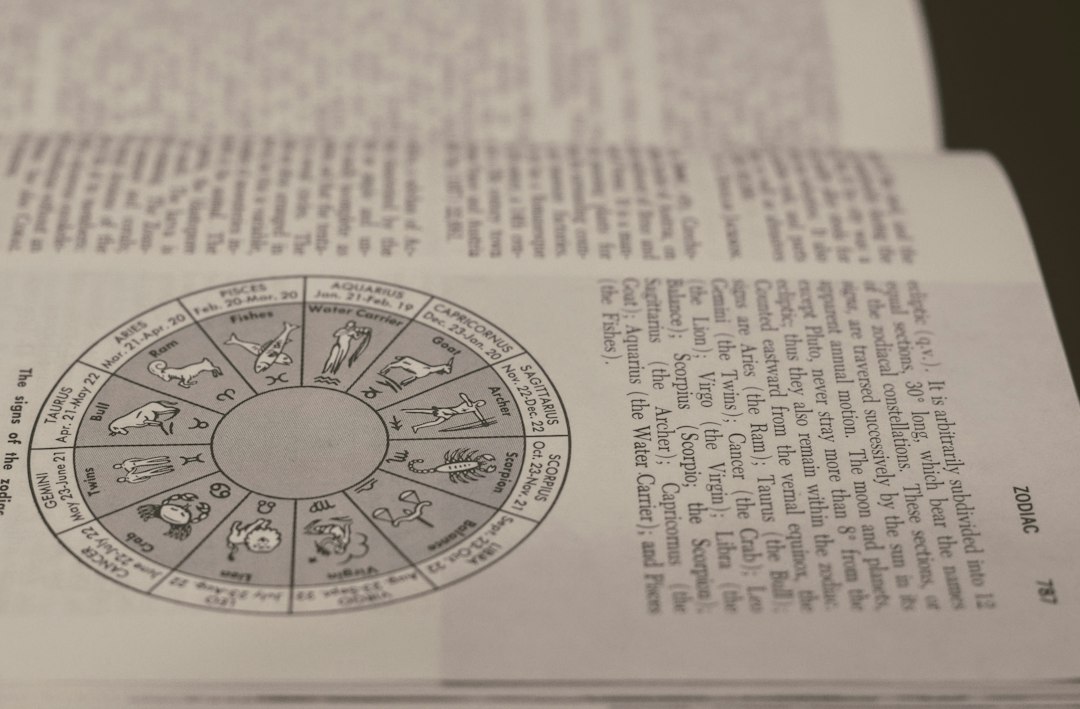
A daily horoscope subscription is a recurring reading generated by comparing where the planets are today against a reference point — either a generic one (your sun sign) or a specific one (your full birth chart). The mechanism is the same either way: transits move, the reference point doesn't, and the reading describes the relationship between the two. What differs entirely is how precise that reference point is, and precision is what determines whether the reading says anything that couldn't apply to a twelfth of the population reading the same page.
What actually moves, and how fast
The planets travel at wildly different speeds, and that speed is the whole reason a daily horoscope is possible at all rather than a monthly or yearly one.
- The Moon moves roughly 13 degrees a day and crosses a full zodiac sign — 30 degrees — in about 2.25 days. It's the only body fast enough to make "today" meaningfully different from "yesterday."
- The Sun moves about 1 degree a day. Over a week that's 7 degrees — enough to matter for tight aspects, not enough to change the story.
- Mercury and Venus move at variable speeds and go retrograde for weeks at a time, appearing to move backward through the zodiac from Earth's vantage point.
- Mars, Jupiter, Saturn and the outer planets move slowly enough that their transits are read in weeks, months or years, not days.
A daily horoscope, in mechanical terms, is mostly a Moon reading with occasional input from whichever faster planet is making an exact aspect that day. That's not a flaw — it's just what's actually available to recompute every 24 hours. A system claiming daily insight from Saturn's position is describing something that hasn't meaningfully moved since last week.
Why the newspaper version is the same for 8.3% of people
A sun-sign horoscope uses one data point: the position of the Sun on your birth date, which sorts everyone into one of twelve bins. Roughly 8.3% of people share a bin with you at any given time — not because you have similar charts, but because you were born in overlapping windows of the calendar. The horoscope then describes today's transits relative to that one point, ignoring where your Moon, your rising sign, or any of your ten planets actually sit.
This produces readings that are technically calculated — the ephemeris data behind them is usually real — but structurally generic, because the comparison is always Sun-to-transit and never chart-to-transit. If your rising sign happens to fall in a different sign from your Sun (true for most people), the houses that transits activate in your actual chart are simply never checked. Sun, Moon and rising sign each carry separate information, and a sun-sign-only horoscope discards two of the three.
What a personalized version recalculates instead
A personalized daily horoscope substitutes your full natal chart for the sun-sign shortcut, then checks the same day's transits against every point in it — not just the Sun's position, but the Moon, the ten planets, the Ascendant, and the house cusps, which are fixed to your birth time and location.
Worked example: say a natal chart has Venus at 14° Taurus. Today's transiting Moon is at 11° Taurus, moving at its usual ~13 degrees a day toward an exact conjunction with that Venus point, which it will reach in roughly 7 hours (3 degrees of separation ÷ 13 degrees per day). An astrologer working from this chart reads that as a day where transiting Moon conjoins natal Venus — a short, specific window, usually given an orb of 2 to 3 degrees on either side, meaning the effect is considered active for roughly half a day before and after exactness.
Now take a second chart with no planets anywhere near Taurus. The same day's Moon passes through without triggering anything notable in that chart, and a personalized reading for that person would correctly say very little about today, rather than manufacturing a generic "emotional day ahead" line to fill the space. That difference — silence when nothing is happening, specificity when something is — is the actual test of whether a horoscope is reading a chart or reading a calendar.
The Moon doesn't know your sun sign. It only knows where your planets actually are.
What the subscription needs from you, and why
The three inputs are birth date, birth time, and birth place, and each does different work. Date fixes the Sun and, roughly, the Moon's sign. Time fixes the Ascendant and the house cusps — this is the input most people don't have precisely, and it's also the one that determines which house a transit lands in on any given day. Place fixes the coordinate system the whole chart is calculated against. If you don't have a birth time, it's still possible to narrow down a rising sign using other markers, though the house-by-house detail in a daily reading will be less exact without it. The three inputs and what each one is actually doing is worth understanding before trusting any chart-based subscription, because a wrong time produces a wrong Ascendant, which shifts every house by the same margin — a systematic error, not a random one.
How the reading gets assembled day to day
Once the natal chart is fixed, generating a daily reading is a repeatable process: pull the day's planetary positions from an ephemeris, calculate the angular distance from each transiting planet to each natal point, flag the ones inside orb, rank them by tightness and by which planets are involved, and translate the tightest few into prose. How an AI astrology reader actually builds a daily horoscope walks through this pipeline in more detail — the mechanical part (ephemeris lookup, orb calculation) is deterministic; only the phrasing of the interpretation is generated language layered on top of a real calculation. That's a meaningful distinction: the numbers behind a good subscription are checkable against any ephemeris, even if the interpretive layer is, by nature, a matter of tradition rather than measurement.
Some subscriptions layer numerology on top of the astrological transit — most commonly a personal day or personal year number, calculated by reducing your birth date arithmetic against the current date. How to calculate a personal year number shows the method if you want to check that part of a reading by hand. It's a separate system from astrology entirely, built from arithmetic rather than planetary position, and a subscription that blends the two is really running two independent calculations and presenting them together, not deriving one from the other.
What this can and can't tell you
A correctly built personalized subscription can tell you which of your natal points are being activated today, by which transiting body, and how tightly. It cannot tell you what will happen, in the sense of an event with a defined outcome — that's an interpretive leap the underlying calculation doesn't support, however precisely the angles are measured. What it's actually offering is a structured, repeatable description of a real astronomical relationship, translated into language about mood, friction or emphasis. Whether that description feels useful on a given day has more to do with how it's phrased and how closely it's read than with any claim about prediction. The honest version of the pitch is narrower than "know what's coming" — it's closer to "know which part of your own chart is under the most pressure today, and why," which is a smaller claim, but one the arithmetic actually backs up. That specificity is also the entire case for choosing a chart-based subscription over a sun-sign one: Amunera builds the daily reading from your full natal chart rather than from the twelve-way sun-sign split, which is the difference between a reading calculated against your Moon, your Ascendant and your houses, and one calculated against a single degree of the Sun shared with roughly a twelfth of everyone else reading it that morning.
Written with AI assistance and reviewed by a person before publication. The astrology and numerology behind Amunera are computed, not generated.