
Compared · 20 September 2026 · 6 min read
Daily Spiritual Guidance Apps vs Amunera: What Actually Differs
One sorts everyone into twelve sun-sign buckets and refreshes on an editorial calendar; the other recalculates from your specific birth data each day — here is exactly what that buys you, and what it doesn't.
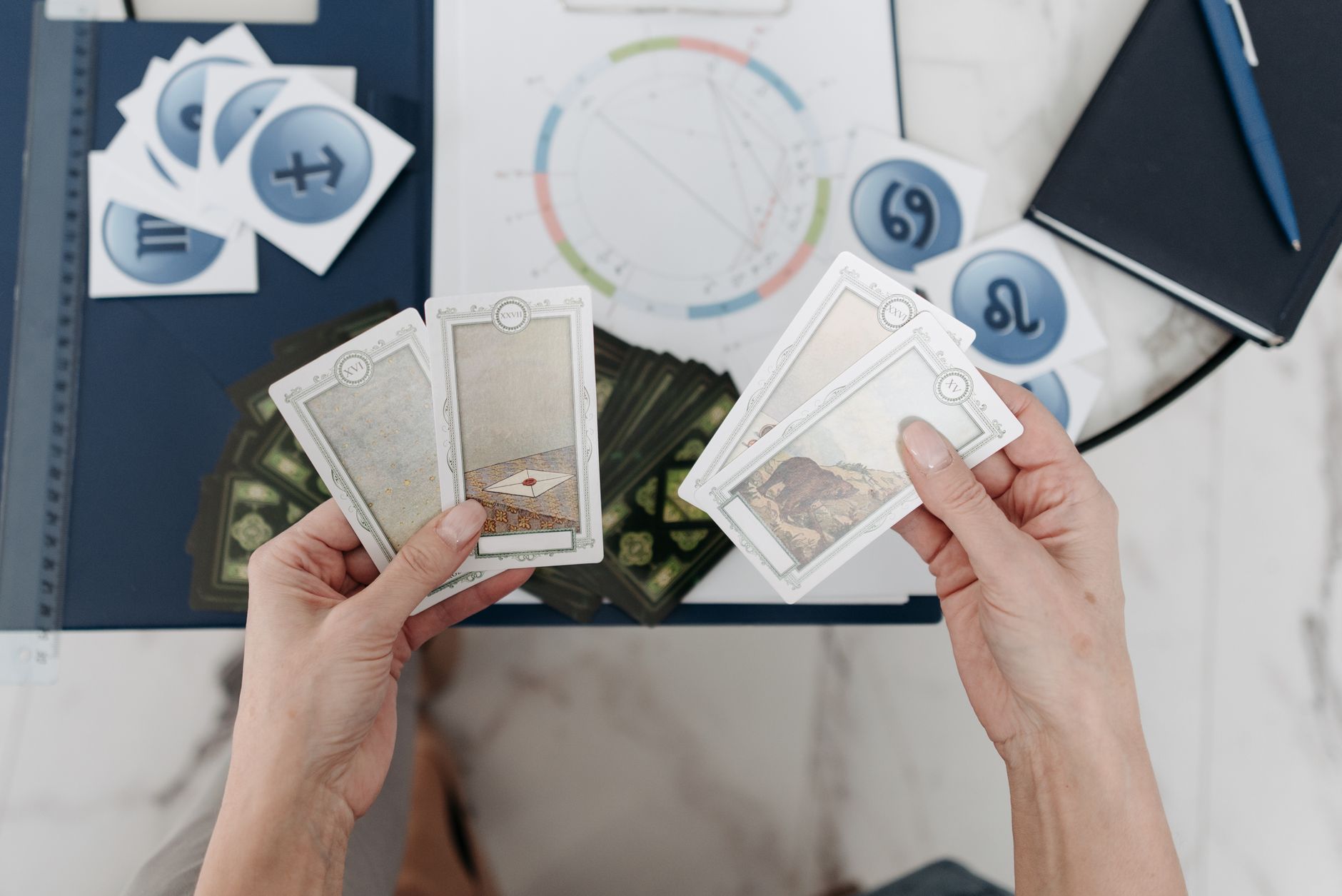
A generic daily spiritual guidance app puts you in one of twelve sun-sign buckets and serves a new line of copy against that bucket every 24 hours, whether or not anything has actually shifted for you specifically. Amunera computes something different: it takes your date, time and place of birth, converts them into ephemeris positions and numerology values, and produces guidance tied to your own chart rather than to the twelfth of the population that happens to share your sun sign. Both call themselves 'daily guidance.' The mechanism underneath is not the same thing at all, and it's worth being precise about where they diverge before deciding which one is worth your attention.
What a generic daily guidance app is actually doing
Most apps in this category run on an editorial calendar. Someone — a writer, or increasingly a model prompted with astrology reference text — produces twelve pieces of content per day, one per sun sign, and the app matches you to yours. That's the entire personalization layer: your month and day of birth, reduced to one of twelve categories, nothing else. Two people born eleven months apart can land in the same bucket and receive the identical message. This is why the content so often reads as generically true — 'today asks for patience,' 'a conversation may surface old feelings' — it has to work for roughly 8% of the population at once, so it can't commit to anything specific.
That structural limit is also why the daily habit tends to fade. If the message never really lands as yours, there's nothing to distinguish today's notification from last Tuesday's beyond the wording. Daily motivation for spiritual growth covers the same pattern from the affirmation-app side: content that isn't tied to anything specific about you or the date runs out of pull by lunchtime, because there was never a mechanism generating it — just a calendar.
The free tier of most astrology apps runs into a related problem, covered in why free astrology readings feel half-right: sun-sign-only content captures roughly a twelfth of what a full chart contains, because it ignores your rising sign, your moon, and every planet's actual degree. A daily guidance app built on the sun sign alone inherits that same ceiling by design, not by cheapness.
What Amunera computes instead
Amunera is a chart engine before it's an app in the push-notification sense. Feed it a birth date, time and place, and it runs three separate systems against that data: Western astrology from an actual ephemeris (planetary positions calculated for your specific moment and location, not looked up from a table of twelve), the Chinese zodiac from the true lunisolar calendar (the year boundary is a real solar-term date, not January 1st — Chinese New Year moves between 21 January and 20 February depending on the year, and getting your animal right if you're born in that window requires knowing which), and Pythagorean numerology, which reduces the digits of your name and birth date through a fixed set of rules, including the master-number exceptions at 11, 22 and 33 that don't get collapsed the normal way.
A 'daily' reading built on that base isn't a new sentence from a calendar — it's a new calculation. Take the numerology side, since it's the easiest to show in full. The commonly used method computes a Personal Day number by reducing your Personal Year, then your Personal Month, then adding the calendar day. Say someone was born on 14 March. For 15 September 2026:
- Personal Year: birth month (3) + reduced birth day (14 → 1+4 = 5) + reduced current year (2026 → 2+0+2+6 = 10 → 1+0 = 1) = 3 + 5 + 1 = 9
- Personal Month: Personal Year (9) + current month (9, September) = 18 → 1+8 = 9
- Personal Day: Personal Month (9) + reduced current day (15 → 1+5 = 6) = 9 + 6 = 15 → 1+5 = 6
That person's Personal Day for 15 September 2026 is 6 — a day the tradition associates with responsibility and domestic matters, distinct from the 9 they'd have carried the day before or the day after. Someone born on a different date gets a different number on the same calendar day, because the calculation runs from their birth data, not from a bucket. The full method, including how Personal Year interacts with Life Path, is worked through in how to calculate your Personal Year number.
The astrology side works the same way, mechanically. A generic app says 'Cancer: today brings friction.' What Amunera can actually compute is whether a transiting planet is forming a specific angle to a specific point in your natal chart — say your natal Moon sits at 2° Cancer, and on a given day transiting Mars crosses 3° Libra. That's roughly a 91° angle, close enough to a square to register as an active aspect for you, on that date, regardless of what your sun sign is. Someone else with a Cancer sun and a natal Moon at 19° Scorpio gets nothing from that same transit. The mechanism that makes this kind of daily reading meaningful — and its actual limits — is laid out in how spiritual guidance from a chart actually works.
The comparison, criterion by criterion
| Criterion | Generic daily guidance app | Amunera |
|---|---|---|
| Input required | None, or just your sun sign | Birth date, time and place |
| Basis of 'today' | Editorial copy written in advance for 12 sign buckets | Ephemeris positions and numerology reduction recalculated for the date against your data |
| Personalization | Same message to everyone sharing a sun sign — about one in twelve users | Differs by exact degree, aspect and personal day number specific to your chart |
| Transparency | Copy is generated or written; the reasoning behind it isn't shown | Every figure can be recalculated by hand from the stated method |
| What actually changes daily | The calendar date; the underlying sign assignment never does | The transiting positions relative to your natal points, and your personal day number |
| Format and cost | Push notification, usually subscription-gated for anything beyond the headline | On-demand reading, computed once against your own data |
| Best suited to | A low-commitment daily prompt or habit cue | A specific question — is today unusual for me, and why, checkable against a method |
Where they genuinely agree
Neither is predictive in the sense of forecasting events. A well-run daily guidance app and a properly computed chart reading are both systems of meaning applied to a date — they describe a tension or a theme, not an outcome, and treating either as a determination of what will happen to you overstates what the tradition itself claims. Both are also meant to be read as a prompt for reflection rather than an instruction, and neither belongs anywhere near a medical, financial or legal decision. On that, there's no real daylight between them.
Which one is the right daily habit
A generic sun-sign app is the right choice for someone who wants a low-effort daily cue — a notification that says pause, notice, breathe — and doesn't mind that the same sentence is landing on a twelfth of its audience at the same moment. There's nothing wrong with that as a habit; it's closer to a mindfulness prompt than to a personal reading, and it's honest about that if you don't ask more of it than it can give.
A chart-computed reading is the right choice when the point of asking is you specifically — when 'today' should mean something different for someone with your Personal Day number than for someone else's, and when you'd rather see the calculation than take the sentence on trust. If you're starting from scratch, how a natal chart is actually calculated shows the full method before any daily layer gets added on top of it. The two aren't really competing for the same five seconds of attention — one is a habit cue, the other is a computation you can check.
Written with AI assistance and reviewed by a person before publication. The astrology and numerology behind Amunera are computed, not generated.