
Reflection · 19 September 2026 · 5 min read
What Moon Phase Were You Born Under — and Is Any of Them Rare?
You keep starting fresh instead of finishing what's already open — here is what the tradition says that comes from, and whether the phase it names is really as rare as people claim.
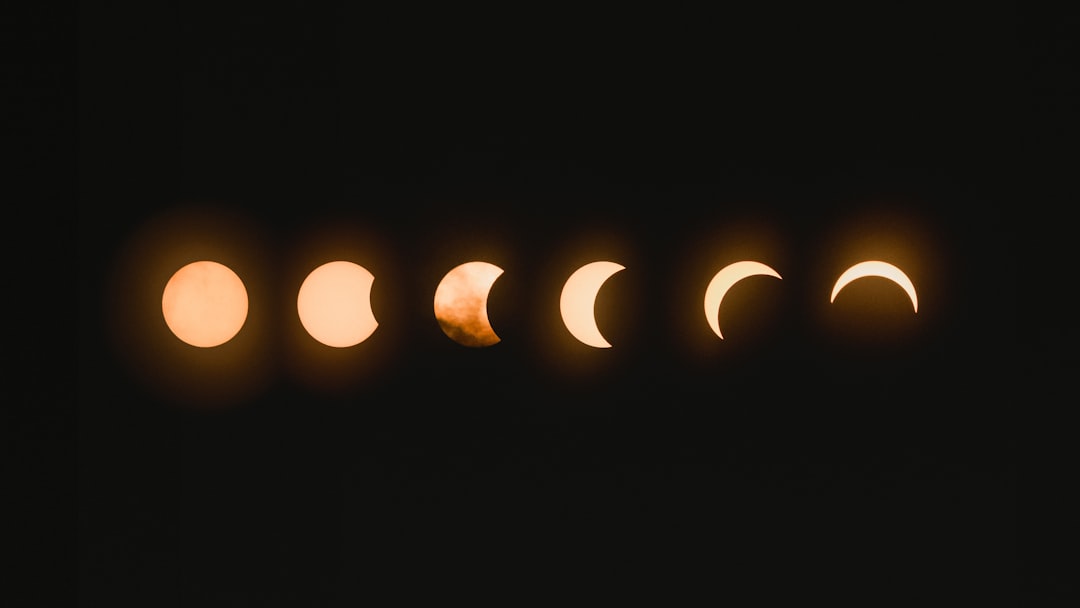
You open a new notebook while the old one still has forty blank pages in it. Or you don't edit the document, you open a new one and start typing from nothing. Or the gym programme isn't finished, but you've already downloaded the next one, because starting again feels more honest than carrying on with something half-done.
There's a milder version too: the fresh start you keep scheduling. Not this Monday, the one after. Not this notebook, the next one. Not this conversation, the one you'll have properly once you've thought it through from the beginning. If any of that is familiar, someone has probably told you it comes from being born under a New Moon — and, in the same breath, that a New Moon birth is rare.
Where this reading actually comes from
A natal moon phase isn't about the date you were born. It's about the angle between the Sun and the Moon at the moment of your birth — how far ahead or behind the Moon was in its orbit relative to the Sun that day. That angle is what astrology divides into eight slices of 45 degrees each: New, Crescent, First Quarter, Gibbous, Full, Disseminating, Last Quarter, Balsamic. New Moon means Sun and Moon were close together, within a narrow band of that circle. Full Moon means they were roughly opposite each other. The rest sit in between.
The New Moon phase is read as beginnings without a finished shape yet — an impulse to act before the thing has fully formed, which is exactly the pattern behind opening the fresh document instead of finishing the messy one. The Full Moon end of the cycle is read the other way: pressure to bring something to a head, to confront rather than defer. Balsamic, at the tail end, is read as clearing out before anything new can start — which is its own version of restlessness, just aimed at endings rather than openings.
Here is the part worth being honest about. Because those eight slices are equal divisions of a circle — 45 degrees each, out of 360 — each one covers, by definition, about one eighth of all possible births. That's arithmetic, not a finding. It means no single phase is inherently rarer than another across a long enough stretch of time, because birth timing has no reason to cluster around any particular point in a 29.53-day lunar cycle. The claim that New Moon births are unusual doesn't hold up against how the eight-way system is built.
What actually is rare is something narrower than the phase: being born within a tight window of the exact conjunction or opposition — not the 45-degree slice, but the specific hour or two when Sun and Moon are precisely aligned. That moment is brief against a 708-hour cycle, so landing inside it is genuinely uncommon. But that's a different claim from "born under a New Moon," and it needs an accurate birth time to even ask the question, in the same way finding a rising sign without a birth time runs into the same wall — the angle is only knowable if the clock is right.
If you want to see the actual mechanics of how a chart turns a date, a time and a place into positions like this, how a natal chart is calculated step by step walks through it properly. It's worth reading before trusting any specific claim about your own phase.
No phase in the eight-way system is rarer than another. What's rare is landing close to the exact moment — and that takes an accurate birth time to check at all.
What to do with the pattern, whichever phase it points to
The part worth keeping isn't the rarity claim. It's the behaviour it's attached to — and the tradition does offer a few concrete ways to work with it, whichever end of the cycle you recognise.
- Find your actual phase before trusting the label. You need a birth time and place, not just a date, since the reading depends on the Sun-Moon angle at that specific hour. If you don't have an accurate time, treat any phase reading as approximate rather than settled.
- Track a single lunar cycle. Pick a project or a habit you'd normally abandon partway through and note the date each time you feel the pull to restart it instead of finish it. A synodic month is about 29.5 days — long enough to see whether the urge to begin again is constant, or whether it clusters around a particular point.
- Use the next New Moon as a boundary rather than an excuse. The practice usually suggested for this pattern isn't to fight the urge to start fresh, but to give it a container: write down the one thing you're allowing yourself to begin at the New Moon, and the one thing you're committing to carry through to the Full Moon that follows, roughly two weeks later. The New Moon in Leo piece shows what a single one of these dates looks like worked through in practice, if you want a concrete example rather than the general idea.
- If the pattern shows up as genuine difficulty finishing things — not just a preference for fresh starts but something that's costing you at work or in a relationship — that's worth raising with someone qualified to help, not something a lunar phase reading is built to address.
The habit of reaching for the blank page over the half-finished one isn't a flaw the chart needs to explain away. It's a pattern with a name in this tradition, a mechanism behind the name that's honest about its own limits, and a fairly ordinary way to test it against your own weeks rather than take the label on faith.
Written with AI assistance and reviewed by a person before publication. The astrology and numerology behind Amunera are computed, not generated.