
Compared · 23 September 2026 · 8 min read
Astrology vs Numerology: What Each One Actually Calculates
Astrology calculates where the sky was at your exact birth moment and place; numerology reduces your birth date, and sometimes your name, to a small set of digits — different inputs, different precision, different claims.
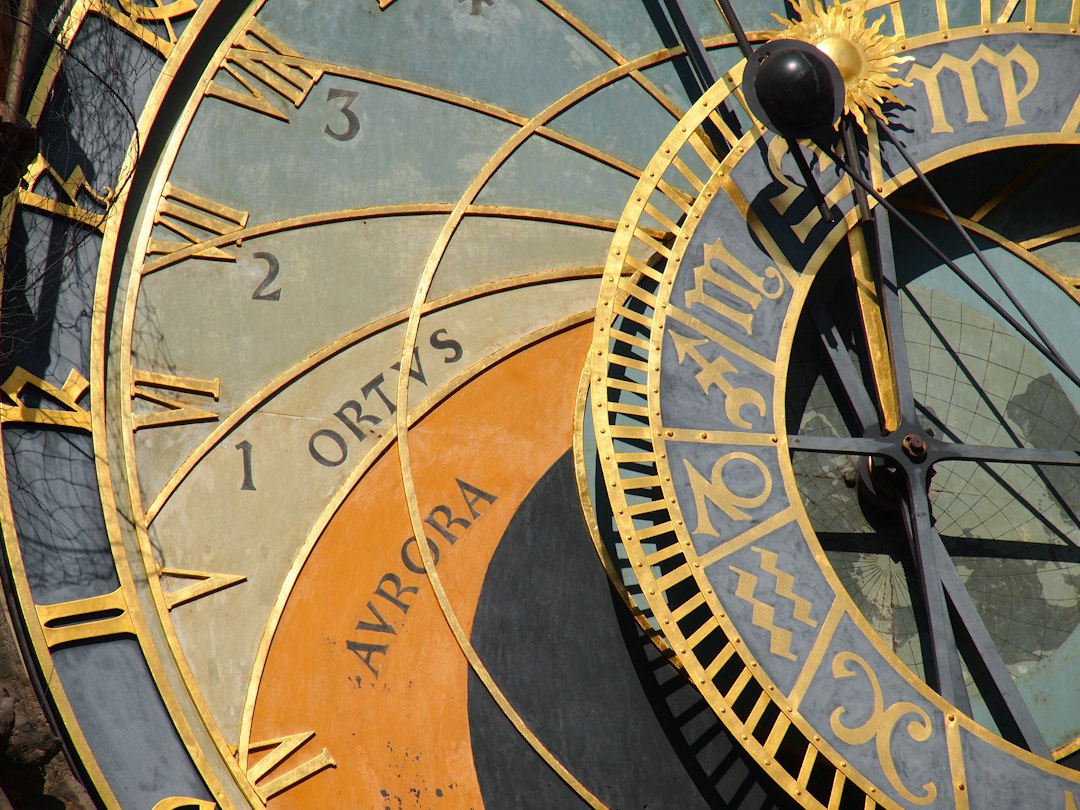
An astrology app and a numerology app are answering two different questions about the same birth. Astrology asks where the sky was — degree by degree, planet by planet — at the exact moment and place someone was born. Numerology asks nothing about the sky; it treats a birth date, and sometimes a full birth name, as a string of digits to be reduced by a fixed arithmetic rule. Both produce something that reads as personal, but they need different inputs, tolerate different amounts of error, and are vulnerable to different kinds of disagreement between two apps that claim to do the same thing.
What each one needs from you
Astrology needs three things to do anything beyond the Sun sign: date, time to the minute if possible, and the exact place of birth, because houses and the Ascendant are calculated from the local horizon at that instant. Without a birth time you can still get the Sun's position and the Moon's sign for that day, but not a rising sign or house placements — the mechanics of that gap are covered in how to find your rising sign without a birth time.
Numerology's core figure, the Life Path number, needs only a date of birth — no time, no place. A second layer of numerology, the Expression and Soul Urge numbers, needs a full birth name instead, converted letter by letter into digits; see the Expression number and how to calculate a Soul Urge number for the letter-value tables involved.
What is actually being calculated
An astrology app is running an ephemeris: a computed model of where the Sun, Moon and planets sit in the zodiac for any given moment. Feed it a date, time and location and it converts that into ecliptic longitude for each body, then into houses using the birth coordinates. The full sequence, including why the birth time changes the houses but not the planets' zodiac positions, is worked through in how a natal chart is actually calculated.
A numerology app is running a much smaller piece of arithmetic. For the Life Path number: reduce the month to a single digit, reduce the day to a single digit, reduce the year to a single digit, add the three together, then reduce that sum once more — stopping early at 11, 22 or 33 if the reduction lands on one of them at any stage. Two examples show how differently this plays out:
- 4 July 1990: month 7, day 4, year 1990 → 1+9+9+0=19 → 1+9=10 → 1+0=1. Sum: 7+4+1=12 → 1+2=3. Life Path 3.
- 29 November 1983: month 11 (November — already a master number, not reduced further), day 29 → 2+9=11 (also stops at the master number), year 1983 → 1+9+8+3=21 → 2+1=3. Sum: 11+11+3=25 → 2+5=7. Life Path 7 — two master numbers inside the calculation do not guarantee a master number at the end.
How sensitive each is to small errors
This is where the two systems part company most sharply. A birth time that's wrong by an hour barely touches the Sun and Moon's zodiac positions, but the Ascendant moves roughly one degree every four minutes and can shift into an entirely different sign within an hour or two — which is why hospital-recorded birth times, often rounded to the nearest five or ten minutes, are usually good enough for the Sun and Moon but a genuine problem for the rising sign and house cusps. Sun, Moon and rising sign explained sets out which of the three actually needs precise timing and which doesn't.
Numerology's Life Path number carries no such risk, because it never uses a time — only a date, which is either recorded correctly or not at all. The name-based numbers are sensitive in a different way: they depend on which version of the name is used, since a birth-certificate name and an everyday name can produce different Expression numbers from the same underlying method, with no birth time involved anywhere in the calculation.
How common each result actually is
Numerology has an answer here that astrology, at least in the form most apps present it, doesn't. Counted across the 73,049 calendar dates from 1 January 1900 to 31 December 2099, Life Path numbers split like this:
| Life Path | Share of dates |
|---|---|
| 1, 3, 5, 7, 8, 9 | ~11.11% each |
| 6 | 10.58% |
| 4 | 7.74% |
| 11 | 6.11% |
| 2 | 5.00% |
| 22 | 3.37% |
| 33 | 0.54% |
The six numbers that never touch a master number — 1, 3, 5, 7, 8 and 9 — land almost exactly on the one-ninth (11.11%) an even split across nine digits would predict. The numbers that share a reduction path with a master number don't: 2 loses dates to 11, 4 loses dates to 22, 6 loses dates to 33, which is why 2 sits at 5.00% instead of 11.11% and 33 itself is genuinely rare, at 0.54% of dates. The mechanics of that carve-out are worked through date by date in Life Path 11. One caveat applies to all of it: these are shares of calendar dates, not of people — births aren't spread evenly across the year, so the true share of people with each Life Path is close to this but not identical, and nobody has published the birth-weighted version.
Astrology doesn't offer an equivalent table for the same reason it can't be reduced to a single number: a natal chart is a combination of ten or more placements across twelve houses, and "how common is this chart" isn't a question with a clean denominator the way "how common is this Life Path" is.
Where two apps calculating the same thing disagree
For numerology, the disagreement is almost always about master numbers. Reducing each part of the date separately — month, then day, then year — and only combining at the end preserves an 11 or 22 that would otherwise vanish if a calculator instead adds every digit of the date in one long pass and reduces that total straight down. Both methods can land on the same final digit, but one is more likely to flag a master number along the way and the other is more likely to flatten it. That, rather than any disagreement about what a master number means, is the actual cause of two numerology apps giving different answers for the same birth date. A second, older source of disagreement is the letter-value system itself: Pythagorean numerology and Chaldean numerology assign different numbers to the same letters, which is a genuine methodological split rather than a bug — covered in Pythagorean vs Chaldean numerology.
For astrology, the equivalent disagreement is house systems. Two apps using the correct birth time, date and place can still put a planet in different houses if one uses Placidus and the other uses Whole Sign, because the two systems divide the sky differently — the planets' zodiac signs won't move, but which house they land in can. That is a separate issue from a wrong birth time, and conflating the two is the most common reason someone ends up with two charts that look like they disagree when only one factor is actually different.
What the tradition claims, and what can be checked
Both systems make a claim beyond the arithmetic and the astronomy: that the resulting number or chart says something about character or tendency. That part is interpretive, not measurable, and it's worth treating it that way — a Life Path 7 is often described as introspective or private, an Ascendant in a fire sign as quick to act, but neither claim can be verified the way the arithmetic or the ephemeris position can. What can be checked, and checked exactly, is the mechanical part: the planet was at that degree at that moment, or the date does reduce to that digit by that rule. Neither system predicts events, and no app producing a chart or a number is doing anything beyond that computation plus a traditional interpretation laid on top of it.
Astrology vs numerology, side by side
| Astrology | Numerology | |
|---|---|---|
| Input required | Date, time, place | Date of birth (name, for a second layer) |
| What's computed | Real planetary positions from an ephemeris | Digit reduction of the date or name |
| Needs exact birth time | Yes, for Ascendant and houses | No |
| Sensitive to | Minutes of birth time, house system choice | Which name variant is used |
| Rarity of results | Not reducible to a single published table | Life Path 33 at 0.54%, Life Path 1 at 11.11% |
| Main source of app disagreement | House system (Placidus vs Whole Sign) | Reduction order, and Pythagorean vs Chaldean letters |
| What's exactly verifiable | The planet's position at that instant | The arithmetic of the reduction |
Neither system predicts anything. What differs is which part of the calculation is fixed by astronomy and which part is fixed by a name someone happened to be given.
When each one is the actual answer
Numerology is the right tool when a birth time isn't known or doesn't matter to the question — a Life Path, a Personal Year (see how to calculate your Personal Year number), or a name-based number all run on information most people already have without digging out a birth certificate. It's also the faster read: one worked calculation, one digit, done.
Astrology is the right tool when the question is about more than one axis of a personality at once — Sun, Moon and rising sign together, or where a current transit lands in a specific house — and it's worth getting the birth time right before trusting the Ascendant or houses at all, since an hour's error can change both. An app that only asks for a date and hands back a full chart, houses included, is guessing at the time it never asked for.
Written with AI assistance and reviewed by a person before publication. The astrology and numerology behind Amunera are computed, not generated.