
Guide · 24 September 2026 · 6 min read
Zodiac Decan Dates: The Full Table and How to Find Yours
A decan is one third of a sign — ten degrees of ecliptic longitude — and its dates shift by up to a day because the Sun doesn't move at a constant speed.
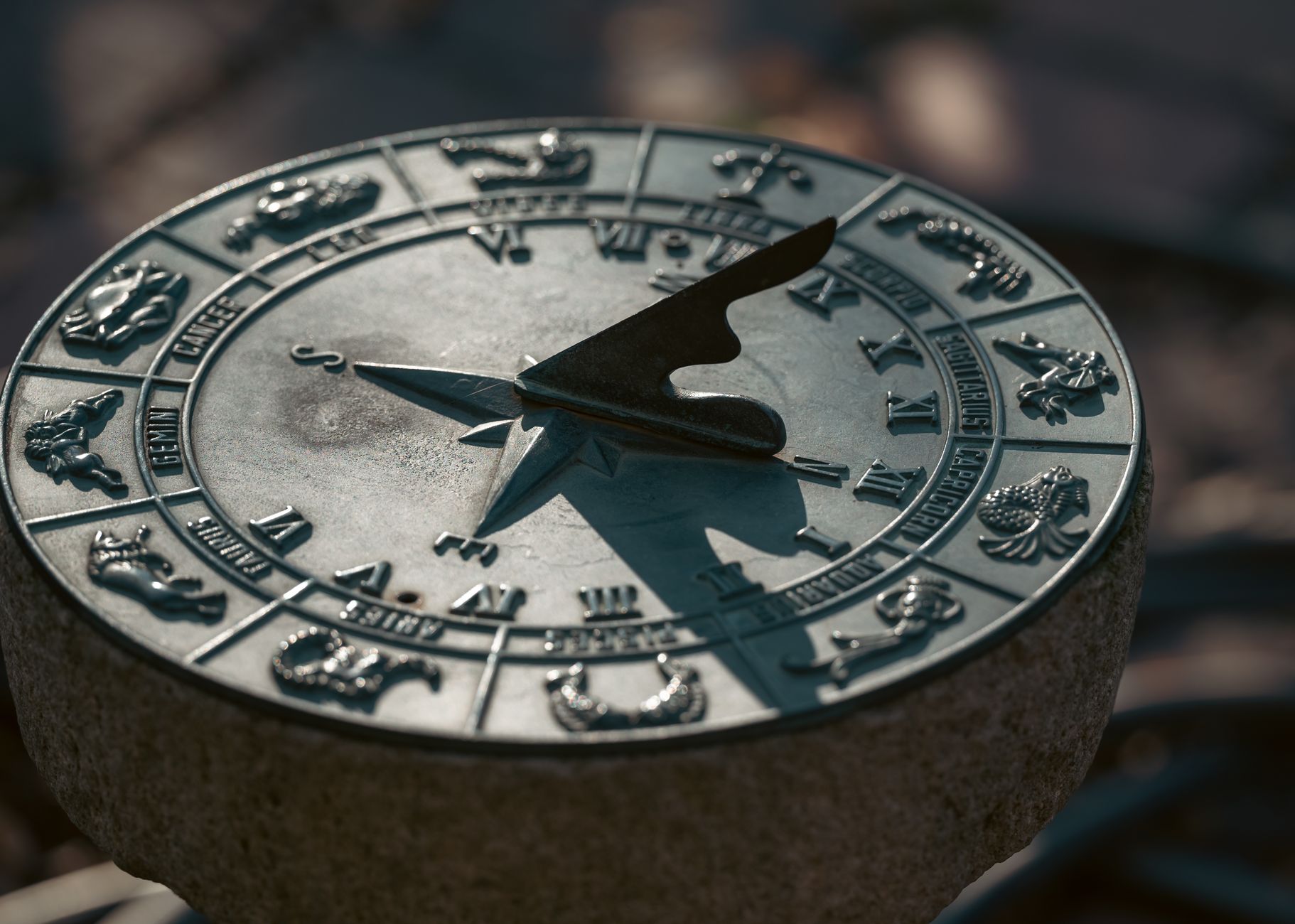
A decan is one third of a zodiac sign — 10 degrees of the 30 degrees a sign spans, which works out to roughly ten days. Every sign has three of them, giving 36 decans across the full circle. The date ranges published below are close enough to use, but they are not fixed the way a sign's own start and end dates feel fixed. The underlying quantity is degrees of ecliptic longitude, not days on a calendar, and the Sun's speed through those degrees changes across the year. That's the whole reason two decan tables from two different sites can disagree by a day on the same boundary — neither is wrong, they're just rounding a moving target differently.
The full table
| Sign | 1st decan | 2nd decan | 3rd decan |
|---|---|---|---|
| Aries | Mar 21–30 | Mar 31–Apr 9 | Apr 10–19 |
| Taurus | Apr 20–29 | Apr 30–May 9 | May 10–20 |
| Gemini | May 21–31 | Jun 1–10 | Jun 11–20 |
| Cancer | Jun 21–30 | Jul 1–11 | Jul 12–22 |
| Leo | Jul 23–Aug 1 | Aug 2–11 | Aug 12–22 |
| Virgo | Aug 23–Sep 1 | Sep 2–11 | Sep 12–22 |
| Libra | Sep 23–Oct 2 | Oct 3–12 | Oct 13–22 |
| Scorpio | Oct 23–Nov 1 | Nov 2–11 | Nov 12–21 |
| Sagittarius | Nov 22–Dec 1 | Dec 2–11 | Dec 12–21 |
| Capricorn | Dec 22–31 | Jan 1–9 | Jan 10–19 |
| Aquarius | Jan 20–29 | Jan 30–Feb 8 | Feb 9–18 |
| Pisces | Feb 19–29 | Mar 1–10 | Mar 11–20 |
Treat every boundary as accurate to within a day either side. If you were born within two days of one of these lines, the calendar date alone won't settle which decan you're in — you need the Sun's actual longitude for that specific year, which is what a proper natal chart calculation gives you and a printed table can't.
Why the boundaries move
The Sun's apparent motion along the ecliptic isn't constant because Earth's orbit isn't a circle. Earth moves fastest at perihelion, its closest approach to the Sun, which falls in early January, and slowest at aphelion, its furthest point, in early July. Near perihelion the Sun advances through roughly 1°01′ of longitude a day (about 1.017°). Near aphelion it advances only about 0°57′ a day (about 0.953°).
Run that through a single decan, which is always exactly 10° regardless of the season. At the January rate: 10 ÷ 1.017 = 9.83 days. At the July rate: 10 ÷ 0.953 = 10.49 days. That's a difference of roughly 16 hours across one decan, purely from orbital speed. Compound it across a full sign's three decans and Capricorn — which sits right at perihelion — runs about two days shorter, calendar-wise, than Cancer, which sits at aphelion. That's the actual mechanism behind something you'll notice if you compare two decan tables: Capricorn's decan boundaries bunch up a little tighter than Cancer's do, even though both are, by definition, exactly 30° of arc.
Ten degrees of sky is a fixed thing. Ten days of calendar is not. The gap between them is where every decan date table gets its rounding from.
Working out your own decan, step by step
Say you were born on 8 August. Leo begins when the Sun reaches 0° Leo, which happens around 22–23 July. From the table above, 8 August falls in Leo's second decan (Aug 2–11), so no further arithmetic is strictly needed — but it's worth seeing where that table figure comes from, because it's the same method you'd use for a borderline date.
Count the days from the start of Leo to 8 August: 23 July to 8 August is 16 days. In early August the Sun is past aphelion but still moving slowly, roughly 0.96°/day. Multiply: 16 × 0.96 = 15.4°. That places the Sun at roughly 15° Leo. Since the first decan runs 0–10° and the second runs 10–20°, 15° sits comfortably inside the second decan, which is Leo's Jupiter decan under the system below.
If your birth date lands within a day or two of a boundary — say 1 August, right at the edge between Leo's first and second decans — this rough method isn't precise enough, because a day either way moves you roughly one whole degree, and the boundary itself might have fallen a few hours earlier or later that particular year. That's the case where you want an actual ephemeris figure for the Sun's longitude on your birth date, not an estimate.
Which planet rules which decan
The most commonly used decan-ruler system assigns each decan a planet by walking through the three signs of its element in zodiac order, starting each sign's own decan sequence with its own ruler. The four elements each rotate through the same three planets:
- Fire (Aries, Leo, Sagittarius) rotates Mars, Sun, Jupiter
- Earth (Taurus, Virgo, Capricorn) rotates Venus, Mercury, Saturn
- Air (Gemini, Libra, Aquarius) rotates Mercury, Venus, Saturn
- Water (Cancer, Scorpio, Pisces) rotates Moon, Mars, Jupiter
Worked out sign by sign, that gives:
| Sign | 1st decan | 2nd decan | 3rd decan |
|---|---|---|---|
| Aries | Mars | Sun | Jupiter |
| Leo | Sun | Jupiter | Mars |
| Sagittarius | Jupiter | Mars | Sun |
| Taurus | Venus | Mercury | Saturn |
| Virgo | Mercury | Saturn | Venus |
| Capricorn | Saturn | Venus | Mercury |
| Gemini | Mercury | Venus | Saturn |
| Libra | Venus | Saturn | Mercury |
| Aquarius | Saturn | Mercury | Venus |
| Cancer | Moon | Mars | Jupiter |
| Scorpio | Mars | Jupiter | Moon |
| Pisces | Jupiter | Moon | Mars |
The pattern is a straight rotation: each sign in a triplicity starts its own list with its own ruler, then continues with the other two rulers in the order the signs themselves appear round the zodiac. That's why, going back to the earlier example, a Leo born 8 August falls in the Jupiter decan — sometimes described as giving that stretch of Leo a broader, more expansive flavour than the Sun-ruled first ten days.
A different answer: the Chaldean decans
Not every source agrees with the table above, and it's worth saying so plainly rather than picking a winner. The older Chaldean system assigns rulers by counting continuously through all 36 decans in a fixed sequence — Mars, Sun, Venus, Mercury, Moon, Saturn, Jupiter, repeating — starting from Aries' first decan, without resetting at each sign boundary the way the triplicity method does. Because 36 isn't a multiple of 7, the sequence lands differently in each sign, and a decan that's Jupiter-ruled in one system can come out Saturn-ruled in the other. Both are internally consistent; they're simply different conventions built on the same 10° divisions, and a reading that names one without saying which it's using is skipping a real methodological choice, not a trivial one.
One more wrinkle: sign boundaries themselves move
Everything above assumes fixed start dates for the signs, but those shift too, by up to a day, because equinoxes and solstices don't fall on the same calendar date every year — the vernal equinox lands anywhere from 19 to 21 March depending on the year's position in the leap-year cycle. Zero degrees Aries is the equinox exactly, by definition, and zero degrees Cancer is the summer solstice exactly, so a decan table built for one year can be a day off for another. This is the same underlying issue covered in more depth in critical degrees in astrology, where a planet sitting at the very start or end of a sign carries its own separate set of questions. If your birth date sits within a day of any boundary in the table above — sign or decan — the only way to remove the guesswork is to run the actual date, time and location through a chart, which is also where the three inputs actually matter, as covered in how to read a birth chart calculator's inputs.
Written with AI assistance and reviewed by a person before publication. The astrology and numerology behind Amunera are computed, not generated.