
Guide · 30 September 2026 · 6 min read
How to Build a Personalized Astrology Report, Step by Step
A personalized report needs three exact inputs and three separate calculations — here is how each one is actually done, worked through with one real birth.
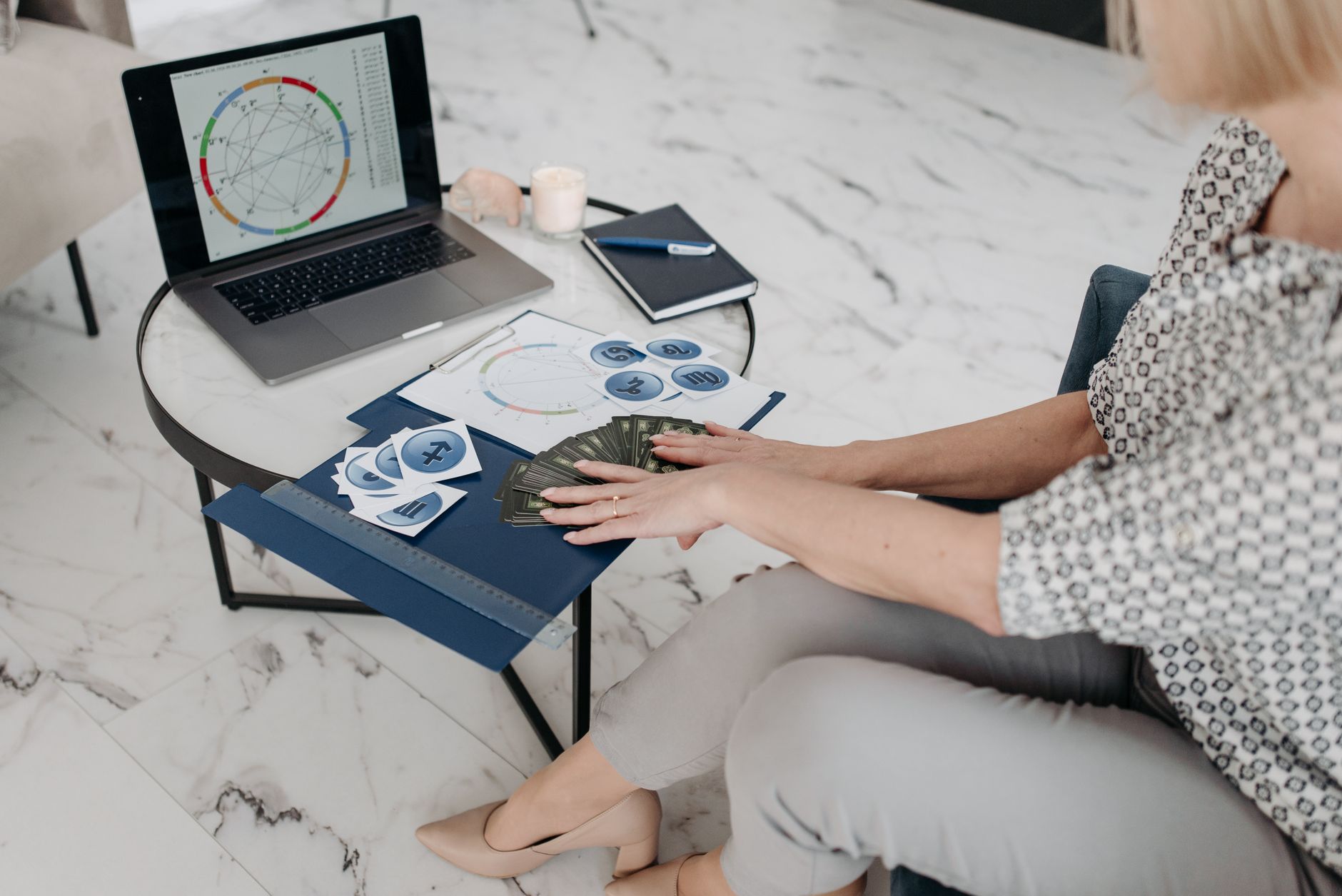
A personalized astrology report is built from three inputs — birth date, birth time, birth place — run through three separate calculation systems: a Western natal chart from an ephemeris, a Chinese zodiac placement from the lunisolar calendar, and a numerology profile from the date and the birth name. None of the three needs the others to work, and none of them predicts anything. What follows is the actual sequence, worked with one real birth so the arithmetic is checkable rather than asserted: 14 March 1990, 7:42am, Manchester, UK, name Jordan Lee.
Step 1: the three inputs, and why a generic horoscope skips two of them
A sun-sign horoscope only needs the date. That is why it can be written for 12 groups of roughly 650 million people each and still sound plausible — it is working from one input out of three. A personalized chart needs:
- Date — fixes the Sun's position and, to within a day or two, the Moon's.
- Exact time — fixes the Ascendant and the house positions. Without it, the Ascendant cannot be calculated at all, only guessed.
- Place — fixes the local horizon the Ascendant is measured against. The same birth minute in Manchester and in Manila produces a different rising sign.
Miss the time and you keep the Sun and Moon but lose the Ascendant and the houses entirely — that is roughly half a natal chart gone, not a rounding error. If you don't have a recorded time, there are ways to narrow the rising sign down without one, but the report is working with less information, and it should say so rather than guess silently.
Step 2: build the Western chart
The Sun's position is read straight off the calendar. 14 March falls in Pisces (19 February to 20 March), and within Pisces it falls in the third decan (11–20 March), traditionally attributed to Scorpio's influence rather than Pisces' own — a Pisces Sun in this decan is read as more intense and more private than a first-decan Pisces born in late February. The full decan table covers all twelve signs the same way.
The Moon can't be read off a calendar the same way — it moves roughly 13 degrees a day and changes sign every two to three days, so 14 March 1990 could fall in any of two adjacent Moon signs depending on the exact hour, which is why this step requires an ephemeris lookup rather than mental arithmetic.
The Ascendant is the most time-sensitive point in the whole chart. The eastern horizon rotates through the full 360 degrees of the zodiac once every 24 hours, which works out to roughly one sign — 30 degrees — every two hours. A birth at 7:42am and a birth at 9:50am on the same day, in the same city, can land in different rising signs entirely. This is the actual mechanism behind how a natal chart is calculated from these three inputs, and it's also why an Ascendant calculated from a birth certificate that rounds the time to the nearest hour can be wrong.
Step 3: place the birth in the Chinese lunisolar calendar
The Chinese zodiac year does not start on 1 January or on any fixed date — it starts on the second new moon after the winter solstice, which lands the Chinese New Year anywhere between 21 January and 20 February depending on the year. In 1990, that date was 27 January.
A birth on 14 March 1990 falls well after that boundary, so the year is straightforward: 1990 is a Horse year, specifically a Metal Horse, since the heavenly stem cycling with 1990 is Geng (Metal). The Year of the Horse page runs every Horse year back to 1930 with its actual start date, which matters more than it sounds — anyone born in the first three weeks of a Horse year, before the new moon fell, is usually still counted in the previous animal's year, and that's the mistake most free zodiac calculators make by defaulting to 1 January.
Step 4: run the numerology, digit by digit
The Life Path number comes from the full date, reduced by repeated digit sums. For 14 March 1990, written 03/14/1990:
0 + 3 + 1 + 4 + 1 + 9 + 9 + 0 = 27 2 + 7 = 9
Life Path 9. No master number appears here — 11, 22 and 33 are only kept unreduced if they occur as an intermediate sum, and 27 isn't one of them. Life Path 9 shows up on 8,116 of the roughly 146,000 distinct calendar dates the calculation can produce, which is close to but not exactly one-ninth of them, because the calendar's leap-year structure and month lengths distribute the nine possible outcomes unevenly.
The Expression number uses the full birth name and the Pythagorean letter values (A=1, B=2, C=3 … I=9, then J=1 again). For Jordan Lee:
J-O-R-D-A-N = 1+6+9+4+1+5 = 26 L-E-E = 3+5+5 = 13 26 + 13 = 39 3 + 9 = 12 1 + 2 = 3
Expression number 3. The full mechanism for turning a name into this digit is the same process regardless of how long or short the name is — sum the letters, reduce, repeat. A related but different number, the Soul Urge, uses only the vowels from the same name and is calculated the same way but answers a different question inside the tradition — motivation rather than outward expression.
Step 5: read the three layers together, without collapsing them into one
This is the part a personalized report is actually for, and it's also where it's easiest to overreach. The three systems don't reference each other and weren't built to agree — a Metal Horse year, a third-decan Pisces Sun and a Life Path 9 are three unrelated frameworks that happen to describe the same birth from three angles.
In this example: Metal Horse is traditionally read as driven and restless, third-decan Pisces as intense and inward, Life Path 9 as oriented toward completion and letting go. Read separately, each is a plausible description on its own terms. Read together, the honest statement is that they don't reduce to a single trait — they're three different vocabularies, not three votes on the same fact.
A report that forces all three into one tidy sentence — "a driven, intense completer" — is doing narrative work the systems themselves don't do. Astrology and numerology calculate genuinely different things from the same birth data: one maps sky positions at a moment, the other maps digit patterns in a date and a name. Presenting them side by side is useful precisely because they're independent — if they agreed by construction, showing both would tell you nothing extra.
What the calculation can and can't tell you
Every step above is arithmetic or an ephemeris lookup — checkable, repeatable, the kind of thing two different pieces of software should agree on if fed the same date, time and place. A proper custom chart reading builds on exactly this: Sun, Moon, Ascendant, house placements, aspects between planets, then the numerology run in parallel.
What none of it does is predict a specific event. The tradition describes a Metal Horse as restless, a ninth Life Path as oriented toward closure, a third-decan Pisces as inward — these are descriptive vocabularies applied to a birth, not forecasts extracted from one. If a report states a date something will happen, or claims a chart configuration guarantees an outcome, that's a claim the underlying calculation cannot support, regardless of how precisely the ephemeris was consulted to produce it.
Written with AI assistance and reviewed by a person before publication. The astrology and numerology behind Amunera are computed, not generated.