
Explainer · 29 September 2026 · 6 min read
What a Daily Horoscope Actually Is: The Mechanism Explained
A daily horoscope is a snapshot comparison — where the Moon, Sun and planets sit today measured against a reference point in your chart, read through inherited meanings for that pairing.
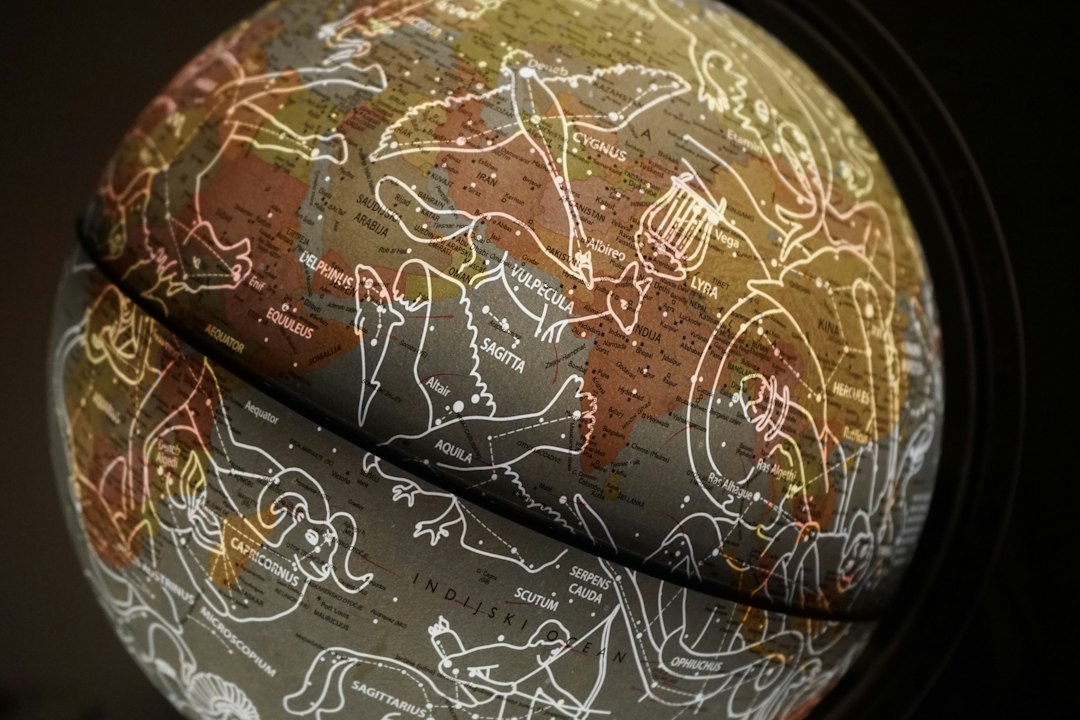
A daily horoscope is not a forecast in the way a weather report is. It is a comparison between two sets of coordinates: where the planets sit in the sky today (their transiting positions) and a fixed reference point, usually your Sun sign, sometimes your full natal chart. The gap between those two positions is measured in degrees, matched against a short list of named relationships called aspects, and then written up using meanings that were assigned to those relationships centuries ago. Nothing about the process claims to know what will happen to you. It describes a repeating geometric pattern and hands you inherited language for it.
What's actually being measured
Every planet moves along the ecliptic — the path the Sun appears to trace through the twelve zodiac signs over a year. On any given day, each planet sits at a specific degree of a specific sign. An astrologer (or the software behind a horoscope generator) records that degree for the Sun, Moon, Mercury, Venus, Mars, and the outer planets, and compares each one to a fixed point.
For a generic sun-sign horoscope, that fixed point is the 0° or the general zone of your birth sign. For a personalised one, the fixed point is your natal chart in full — your actual Sun, Moon, Ascendant and planetary degrees as calculated for your exact birth date, time and place, the way it's done in how a natal chart is actually calculated, step by step. The difference matters more than most horoscope apps let on: a generic horoscope is comparing today's sky to one twelfth of the population at once. A personalised one is comparing today's sky to a specific arrangement that exists for you alone.
The Moon does most of the daily work
The Sun moves about 0.9856° per day, which works out to roughly 30.4 days per sign — that's why sun-sign horoscopes barely change week to week within a given month. The Moon moves about 13.2° per day, and since each sign spans 30°, it changes sign roughly every 2.27 days (30 ÷ 13.2). That single fact explains why daily horoscopes feel different from weekly ones and monthly ones: most of what shifts day to day is the Moon's position, not the Sun's.
Take a worked example. Say the Moon starts a day at 15° Aries. Aries ends at 30°, so the Moon has 15° left to travel — at 13.2° per day, it crosses into Taurus a little over one day later, around the 27-hour mark. Two days after that it's likely mid-Taurus, heading for Gemini. A horoscope written for 'today' that emphasises mood, reaction and impulse is almost always describing the Moon's current sign and its aspects to your natal planets, because the Moon is the fastest-moving piece on the board.
Aspects: the actual grammar of the reading
An aspect is the angular distance between two points, rounded to one of a small number of named relationships, each with a permitted margin of error called an orb:
| Aspect | Angle | Typical orb |
|---|---|---|
| Conjunction | 0° | up to 8° |
| Sextile | 60° | up to 4–6° |
| Square | 90° | up to 7–8° |
| Trine | 120° | up to 7–8° |
| Opposition | 180° | up to 8° |
Here's how that turns into a sentence in a horoscope. Suppose your natal Sun sits at 12° Libra — that's 192° along the zodiac wheel measured from 0° Aries. Today, transiting Mars is at 15° Cancer, which is 105° along the wheel. The difference is 192 − 105 = 87°. That's within 3° of an exact square (90°), well inside the standard orb, so the aspect is 'active' for the day. A horoscope built on your actual chart would flag this as 'Mars square your Sun' and describe it using the traditional square vocabulary — friction, urgency, a need to act. A generic sun-sign horoscope can only approximate this by using 0° of your sign as a stand-in for your actual Sun degree, which is why it sometimes reads accurately and sometimes reads like it's talking about someone else's week.
The aspect is exact geometry. The sentence built from it is interpretation, and the tradition is explicit that it is interpretation, not measurement of an outcome.
Void-of-course days and why some horoscopes say 'nothing much today'
Between the moment the Moon makes its last aspect in a sign and the moment it enters the next sign, it is described as void of course. This can last anywhere from a few minutes to over a day, depending on how close the Moon was to the sign boundary when it finished its last aspect. Traditionally this period is read as unsettled for starting anything new — decisions made then are thought to unravel or need revisiting. The mechanics of finding your own void periods are covered in void of course Moon, explained, and it's one of the few places where a daily horoscope's vague tone ('a quiet day, best for reflection') has a specific astronomical cause rather than just being filler.
Generic versus personalised: what actually changes
| Generic (sun-sign) | Personalised (full chart) | |
|---|---|---|
| Reference point | 0° of your Sun sign | Your exact natal degrees |
| Inputs needed | Birth date only | Date, time, location |
| Moon read against | Sign only | Natal Moon, houses, aspects |
| Rising sign considered | No | Yes, if birth time is known |
| Audience per reading | ~8.3% of people | One chart |
The rising sign row matters because two people born on the same date, in the same city, four hours apart, can have different Ascendants and therefore different houses — meaning the same transiting Mars square lands in a different life area for each of them. If you don't know your birth time, there are still ways to narrow it down, covered in how to find your rising sign without a birth time.
Numerology's parallel: the personal day number
Astrology isn't the only system with a daily reading. Numerology has its own version, built from arithmetic rather than planetary degrees. A Personal Day number is derived by reducing your birth month and day, added to the current month, day and year, down to a single digit — the same reduction method used to find a Personal Year number. It cycles on its own schedule, unrelated to where the Moon happens to be, which is why a numerology-based daily reading and an astrology-based one can say different things on the same date. They're not competing measurements of the same thing; they're two separate symbolic systems layered over the calendar in different ways.
How the automated versions assemble the text
Most daily horoscopes online today, including AI-generated ones, follow a fixed pipeline: calculate the transiting positions for the date, calculate the aspects to a reference chart, match each aspect to a stored interpretive fragment, then stitch the fragments into readable prose. The astronomy is exact; the fragments are not. The mechanics of that pipeline, including where a language model gets involved and where it doesn't, are laid out in how an AI astrology reader actually builds your daily horoscope. Knowing this doesn't make the aspects less real as geometry — Mars really is at 15° Cancer on the day in question — it just clarifies which part of the sentence is measured and which part is inherited language applied to the measurement.
What it doesn't do
A daily horoscope, however it's produced, describes a recurring pattern of angles between moving points and a fixed chart. It doesn't know what meeting you have today, and the tradition itself doesn't claim it does — it offers a symbolic weather pattern, not an event forecast. Two people with a transiting square to their natal Sun on the same day are having two entirely different days for reasons the chart has no access to. What the chart can tell you, reliably, is which planets are near which degrees right now, and what that combination has traditionally been read to mean — which is a smaller and more honest claim than 'this is what will happen today,' but it's the one the mechanism can actually support.
Written with AI assistance and reviewed by a person before publication. The astrology and numerology behind Amunera are computed, not generated.