
Answered · 1 October 2026 · 7 min read
What Your Moon Sign Actually Means for Your Emotions
The moon sign describes how you process feeling, not who you are — and the difference matters more than most horoscopes let on.
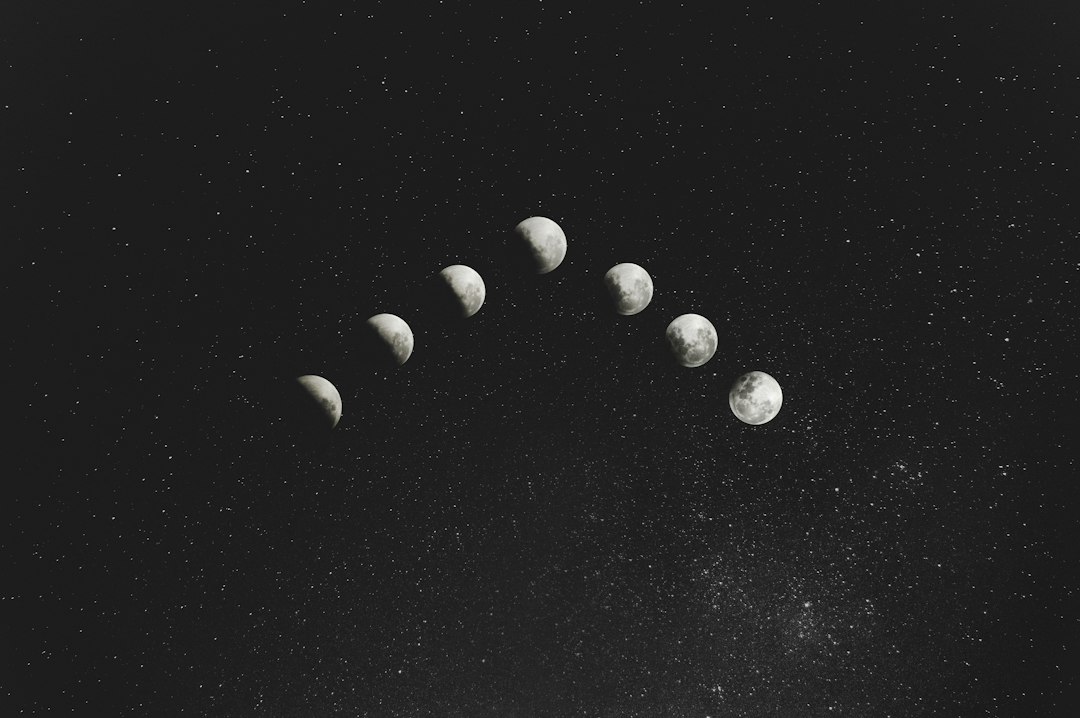
In astrology, your moon sign is read as the zodiac sign the Moon occupied at the exact moment you were born, and it's traditionally taken to describe emotional reflex — how you react before you've had time to think, rather than the more deliberate self your sun sign is said to represent. Where the sun sign is calculated from the date alone, the moon sign needs the date, the time, and the place, because the Moon moves roughly 13 degrees a day and can change sign more than once within a single 24-hour span.
Put your birth details into the calculator above and it will give you a sign. The rest of this piece is about what that sign is actually claiming to tell you, how the number gets produced, and the specific ways people misread it.
What the moon sign claims to describe, and what it doesn't
The tradition draws a fairly consistent distinction across schools: the sun sign is the identity you grow into and present outward, the rising sign is the manner in which you meet new situations, and the moon sign is the pattern underneath both — the way you self-soothe, what makes you feel safe, and what you need from other people when you're not performing for them. A Leo sun with a Cancer moon, in this reading, might come across as confident and expressive in public while being quietly protective of a small number of people in private. None of this is a claim about brain chemistry or temperament in any measurable sense. It's a symbolic framework, and it's worth being clear that no controlled study has shown moon sign correlates with measured emotional traits. What follows describes what the system says about itself, not a finding about how people actually behave.
A moon sign also isn't a mood forecast. It doesn't predict how you'll feel on a given Tuesday — that's closer to what a void of course moon or the current moon phase is used for in daily practice. The natal moon sign is fixed at birth and, in this tradition, describes a standing pattern rather than a passing one.
The arithmetic behind the sign, worked through
The Moon's position is given in an ephemeris as a longitude between 0° and 360°, with each of the twelve signs occupying a 30° band — Aries runs 0°–30°, Taurus 30°–60°, and so on round to Pisces at 330°–360°. The complication is that the Moon doesn't move at a constant speed. Its average daily motion is about 13.2°, but because its orbit is elliptical, that speed ranges from around 11.8° a day near apogee (furthest from Earth) to about 15.4° a day near perigee (closest). At the slow end, the Moon can sit in one sign for roughly 2.54 days; at the fast end, it moves through in about 1.95 days. That's why 'the Moon changes sign every two and a bit days' is a useful rule of thumb but not a fixed interval.
Here's how that plays out for an actual birth. Say an ephemeris gives the Moon's longitude as 27°14′ Gemini (that's 87°14′ in the 0–360 scale) at 00:00 on a given day, moving at 13.5° per day that day. Two people are born on that date.
- Person A, born at 06:00 — 6 hours after the reference point, or 0.25 of a day. The Moon has moved 13.5° × 0.25 = 3.375°, landing at 27°14′ + 3°23′ = 30°37′ Gemini-scale, which crosses the 30° boundary of Gemini (Gemini runs to 60° in this local frame, so this stays inside Gemini — the sign doesn't change here).
- Person B, born at 18:00 — 18 hours later, or 0.75 of a day. The Moon has moved 13.5° × 0.75 = 10.125°, landing at 27°14′ + 10°08′ = 37°22′ in the same local frame — past the 30° mark that ends Gemini's 30° band from its own start point, which pushes the Moon into the next sign, Cancer, at roughly 7°22′.
The numbers above are illustrative of the method rather than a real ephemeris entry, but the mechanism is exact: twelve hours apart, on the same calendar date, two people can have different moon signs, and the only thing that separates them is clock time. This is the single most common reason a free or approximate moon sign calculator gives someone the wrong answer — it's not that the maths is hard, it's that a birth certificate time rounded to 'morning' or an unknown time zone at the place of birth throws the input off by enough to cross a boundary. The full mechanics, including how time zone and daylight saving are folded in, are set out in how the moon sign calculator works.
Where people get it wrong
The most frequent error isn't in the astrology, it's in the input. Three things routinely produce a wrong sign:
- Using a time zone for where you live now, not where you were born. The ephemeris needs the local time and offset at the birth location on that date, including whether daylight saving was in effect.
- Rounding an unknown birth time to noon. Hospitals and birth certificates often record a time to the minute; guessing 'around midday' can easily land you in the wrong sign if the real change happens, say, at 14:40.
- Treating a moon sign born within a few hours of a boundary as settled fact. If your calculated position lands within roughly half a degree of the sign edge, a birth time that's off by even 20–30 minutes could change the result. In that specific situation, and only that one, it's worth getting an exact birth time from an official record before trusting the sign.
If you don't have a confirmed birth time at all, the same boundary problem applies even more sharply to the rising sign, which moves roughly one degree every four minutes rather than 13 degrees a day — it's far more time-sensitive than the Moon, and worth reading separately if you're missing that detail.
The twelve signs, grouped by element
Traditional interpretation groups the moon signs by element, and the groupings are used as a shorthand for how emotion is said to move through each one — not as four fixed personality types.
| Element | Moon signs | Traditional description |
|---|---|---|
| Fire | Aries, Leo, Sagittarius | Reacts quickly and visibly; feeling is expressed outward almost as soon as it arrives |
| Earth | Taurus, Virgo, Capricorn | Processes feeling slowly and privately, often through action or routine rather than discussion |
| Air | Gemini, Libra, Aquarius | Talks or thinks a feeling through, sometimes analysing it before fully sitting with it |
| Water | Cancer, Scorpio, Pisces | Absorbs emotional atmosphere readily, both their own and other people's |
These descriptions come from the tradition's own internal logic — fire signs are read as active and immediate, water signs as receptive and retentive — and they're best treated as a starting vocabulary rather than a verdict. A Capricorn moon isn't 'cold'; in this framework it's read as someone whose emotional processing tends toward steadiness and control rather than open display, which is a description of a tendency, not a limit on what someone feels.
What the moon sign can't tell you
A single sign is a coarse instrument. The Moon's exact degree, the house it falls in, and any close aspects it makes to other planets in the full natal chart all modify the reading in the tradition — a Cancer moon in the 10th house is interpreted quite differently from a Cancer moon in the 4th, even though the sign is identical. The sign alone also says nothing about the sun sign or rising sign sitting alongside it, and most readers within the tradition treat those three together as the minimum needed to say anything specific about a person, rather than relying on any one of them in isolation. If you want to see how the three are worked out from the same birth data and where they diverge, that's covered in sun, moon and rising sign explained.
The moon sign is a description of emotional reflex, not a diagnosis of character — the tradition itself treats it as one layer among several, not the whole reading.
What the calculator above gives you is accurate as an astronomical position for the date, time and place you enter. What it can't give you is certainty if the time is a guess, and it can't give you the rest of the chart that the tradition says should sit around it before the reading means very much at all.
Written with AI assistance and reviewed by a person before publication. The astrology and numerology behind Amunera are computed, not generated.